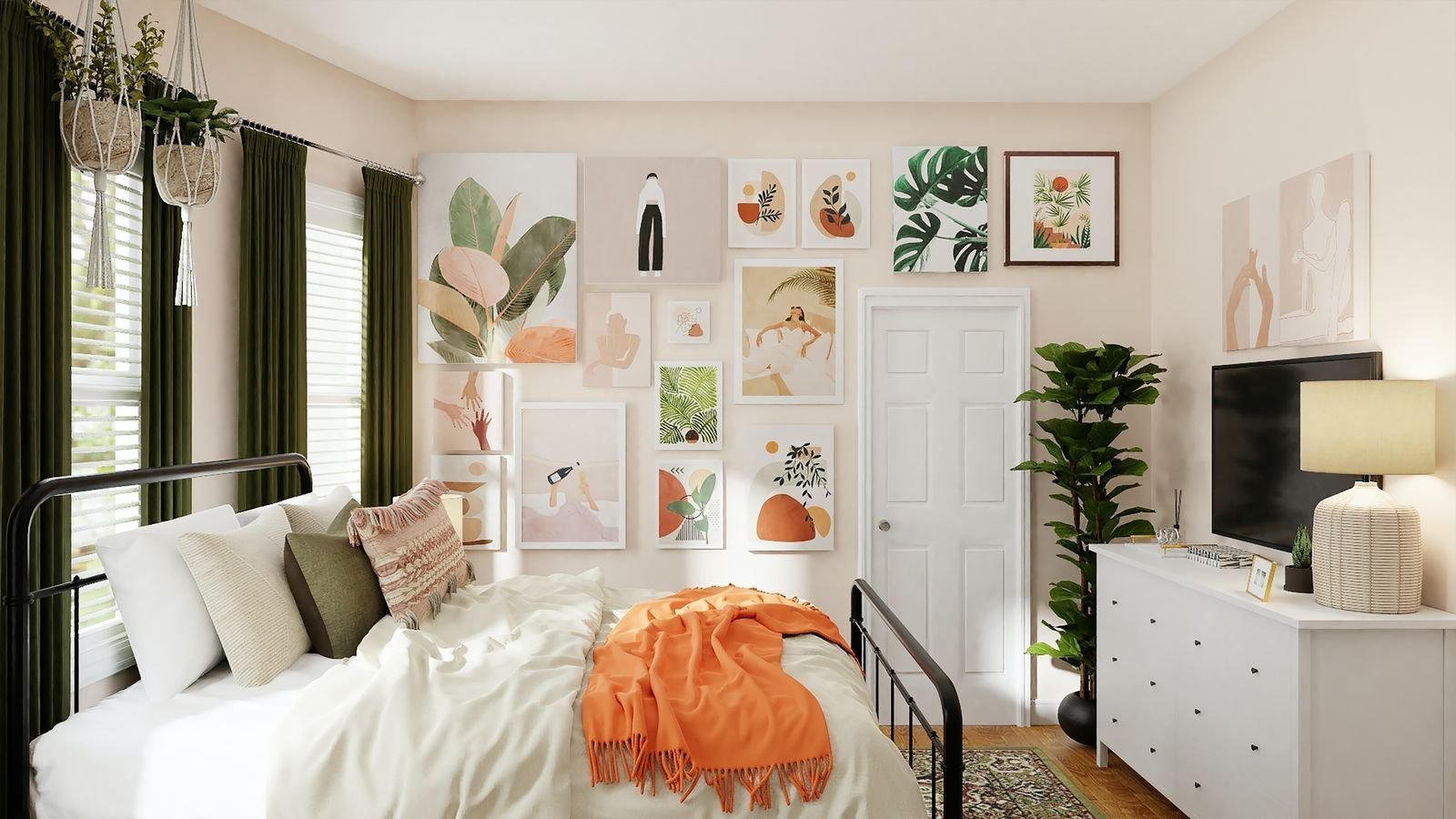
You know that moment when you walk into your rented flat and think, “this could look so much better, but I can’t exactly repaint the walls”? Yeah, most tenants in India know that feeling well.
The good news: home improvement ideas for rented apartments don’t have to mean permanent changes or an angry call from your landlord. There’s a genuine middle ground between “do nothing because it’s not my house” and “renovate like you own the place.” I’ve moved four times in the last six years, and I’ve picked up a decent number of tricks along the way — some worked brilliantly, a couple were a waste of money, honestly.
This list sticks to what’s reversible, affordable, and actually makes a rented space feel like home in 2026, without touching your security deposit.
Why Rented Homes Need a Different Approach to Improvement
Direct answer: Rented apartments need reversible, non-permanent solutions because most rental agreements in India restrict drilling, painting, or structural changes — and security deposits (often 2-3 months’ rent) are at stake if damage is found during the move-out inspection.
Most home improvement content online just assumes you own the walls. Drill here, paint there, knock down that wall. None of that applies when you’re renting, and honestly, a lot of bloggers seem to forget renters exist at all.
The trick with a rented space is thinking in layers you can peel off later — vinyl instead of paint, adhesive hooks instead of nails, furniture instead of fixtures. Nothing here needs a broker’s permission or a call to your landlord asking “can I just—”
1. Peel-and-Stick Wallpaper for an Instant Wall Refresh
This is probably the single highest-impact change on this whole list. Peel-and-stick wallpaper (₹40-₹90 per square foot in India) goes up without a drop of paint and comes off clean when you move out, assuming the wall underneath was in decent shape to begin with.
I did this for one accent wall in a Pune flat and it completely changed how the living room felt. Total cost, including some wastage from a shaky first attempt, came to around ₹3,200 for a 10×8 foot wall.
A few honest tips:
- Test a small patch first — some cheaper walls (especially older plaster) don’t hold adhesive well
- Textured or patterned designs hide small application mistakes better than solid colours
- Budget extra material for corners; you’ll waste more than you think
2. Command Strips and Adhesive Hooks Instead of Nails
Nail holes are the number one reason people lose part of their deposit. Command strips solve this completely, and they’ve genuinely gotten stronger over the last few years — some now hold up to 7-8 kg.
Use them for wall art, small shelves, curtain tie-backs, even lightweight mirrors. Has your landlord ever done a surprise inspection? Mine has, twice, and never once noticed the strips.
One thing worth knowing — humidity affects adhesive strength. In coastal cities like Mumbai or Chennai, check and replace strips every few months, especially through monsoon.
3. Furniture Placement Can Fix More Than You’d Expect
This one costs nothing, which is exactly why people skip it. But rearranging furniture is honestly underrated as a form of home improvement for rented apartments — it changes the whole feel of a room without spending a rupee.
Picture a 1BHK in Bengaluru where the bed’s shoved against the darkest wall because “that’s where it fits.” Move it under the window instead, and suddenly the whole room feels twice the size. I’ve seen this exact fix change how someone feels about their apartment, no joke.
A few placement rules that consistently work:
- Keep walking paths clear rather than cutting through the middle of a room
- Anchor a room with the largest piece first, then build around it
- Mirrors opposite windows genuinely do make small rooms feel bigger — not just a design cliché
4. Removable Contact Paper for Kitchens and Cabinets
Rented kitchens are almost always the tiredest-looking part of the flat — chipped cabinet doors, ancient countertop laminate, that one shelf nobody trusts. Removable contact paper (₹150-₹300 per roll) covers all of that without a single tool.
I wasn’t fully convinced this would look good until I tried it on a cabinet front in a Hyderabad rental. It genuinely looked like a proper renovation from a few feet away. Up close? You could tell. But from a few feet away, which is honestly how most of us actually experience our own kitchen, it worked.
Marble-effect and matte solid colours tend to look the most convincing — busy patterns can look cheap under bright kitchen lighting.
5. Tension Rods and Curtains Can Divide a Space Without Construction
Direct answer: Tension rod curtains (₹500-₹1,500 for rod and fabric) let renters create a private study nook, a separate sleeping area, or hide storage clutter without any drilling — and they come down in under two minutes when it’s time to move.
Studio apartments and 1RKs benefit the most from this trick. A curtain across half a room can turn one open space into something that feels like two rooms, at least psychologically.
I’ll be honest, though — this works better for visual separation than for actual sound or light blocking. Don’t expect a curtain to replace a wall for noise. If your flatmate snores, a curtain isn’t solving that.
6. Battery-Powered LED Strip Lighting Under Cabinets and Shelves
Rental flats in India often come with exactly one harsh tube light per room, and nothing else. Battery or USB-powered LED strips (₹300-₹800) fix that instantly, no electrician, no wiring changes.
Stick them under kitchen cabinets, along a bookshelf, or behind a TV unit for that soft glow effect. [link to related guide on budget smart home upgrades here] covers a few smart versions of this too, if you want scheduling built in.
Warm white (around 2700-3000K) tends to feel cosier than the cooler white most Indian homes default to — worth trying if your flat feels a bit clinical.
7. A Good Rug Changes a Room More Than People Expect
Rented flats almost always have the same flooring everywhere — usually a plain tile or vitrified finish that feels a bit cold, literally and visually. A rug (₹1,500-₹4,000 depending on size) is one of the fastest ways to add warmth and define a space.
I underestimated rugs for years, honestly thought they were a bit unnecessary. Then I put one under a coffee table in my current place and the whole living room suddenly felt “finished” in a way it hadn’t before.
Go for something at least 5×7 feet for a living room — smaller rugs tend to look like an afterthought rather than a design choice.
8. Door and Cabinet Handle Swaps (Keep the Originals!)
This is a small one, but it adds up. Swapping out cheap plastic cabinet handles or door knobs for something nicer (₹50-₹150 each) is one of the cheapest facelifts around — as long as you keep the original hardware in a labelled bag to reinstall before you leave.
I learned this the hard way after losing the original screws for one handle. Ended up buying a matching one just to avoid an awkward conversation with the landlord at move-out.
[link to related guide on move-in checklist for rented flats in India here]
Putting Together a Rented Home Makeover Under ₹10,000
Here’s roughly how a full-apartment refresh could break down for a typical 1BHK:
| Improvement | Approx Cost |
| Peel-and-stick wallpaper (1 wall) | ₹3,000 |
| Command strips (pack of 3-4 sets) | ₹800 |
| Contact paper for kitchen | ₹1,200 |
| LED strip lighting | ₹600 |
| Rug for living room | ₹2,500 |
| Handle/knob swaps (6-8 pieces) | ₹700 |
| Total | ~₹8,800 |
That’s a genuinely noticeable transformation, and every single item above comes off cleanly when your lease ends.
What NOT to Do in a Rented Apartment
Some improvement ideas seem harmless but cause real trouble at move-out. Skip these:
- Painting walls without written permission, even “just one accent wall”
- Drilling into tiles for shelves — tile cracks are expensive to repair and almost always noticed
- Removing existing fixtures (light fittings, geysers) even temporarily, unless you’re storing the originals carefully
- Using strong adhesive on wooden furniture provided by the landlord — it can strip the polish off on removal
FAQ: Common Questions About Home Improvement for Rented Apartments
Will peel-and-stick wallpaper damage the paint underneath? Usually not, if the wall paint is in decent condition and you remove the wallpaper slowly and evenly. Freshly painted walls (under 30 days) are more risky — the paint hasn’t fully cured.
Can my landlord deduct my deposit for command strip marks? Generally no, since they’re designed to come off without residue. That said, always test-remove one strip in an inconspicuous spot before your final inspection, just to be safe.
Is it worth investing in home improvement for a place I’m only renting for a year? It depends on the cost. Anything under ₹500 that you can take with you when you move (rugs, lights, plants) is almost always worth it. Skip bigger, wall-specific investments if you know you’re moving soon.
What’s the cheapest way to make a rented apartment feel less bare? Honestly, a rug and a couple of plants get you 70% of the way there for under ₹2,000 combined. Lighting is the next cheapest big win.
Do landlords in India generally allow tenants to make these changes? Most rental agreements are silent on reversible changes like this, since nothing damages the property. It’s still smart to mention bigger changes (like wallpaper) to your landlord upfront, just to avoid any confusion later.
How do I remove contact paper cleanly if it’s been up for a long time? A hairdryer on low heat softens the adhesive before peeling, which makes a huge difference versus trying to pull it off cold. Go slow at the corners first.
Final Thoughts
Renting doesn’t mean living in a space that never quite feels like yours. Every idea here is fully reversible, budget-friendly, and won’t cost you a single rupee of your deposit — which, let’s be honest, is the real fear behind most rental decisions.
Start small. Pick one or two changes from this list — maybe the rug and the LED strips — and see how much of a difference it makes before committing to the rest. Your landlord will never know, and your flat will finally feel like it’s actually yours, even if it’s only for another year on the lease.