Watching your toddler lick the floor tile (yes, they do that) or your dog flop down for a nap right after you’ve mopped with a strong chemical cleaner — that’s the exact moment most parents start googling safer alternatives.
Good natural home cleaning tips matter more once there’s a crawling baby or a curious pet in the house, and honestly, that’s when most people start paying attention to what’s actually in their cleaning products. I switched most of my own cleaning routine over after my dog developed a mild paw irritation that our vet traced back to a floor cleaner residue — not dramatic, but enough of a wake-up call.
This guide covers what genuinely works for natural cleaning in Indian homes in 2026, without pretending vinegar and baking soda solve absolutely everything (they don’t, and I’ll be upfront about where they fall short).
Why Standard Cleaning Products Are a Bigger Concern With Pets and Kids Around
Direct answer: Pets and young children spend far more time at floor level, in direct contact with surfaces, and put things in their mouths more often than adults — making chemical residue from standard cleaners a real exposure risk that natural home cleaning tips specifically address.
A toddler crawling across a floor mopped with a strong phenol-based cleaner picks up residue on their hands within minutes, and hands go straight to mouths at that age, no way around it. Dogs and cats, similarly, walk across floors barefoot (so to speak) and then groom themselves, ingesting whatever’s on their paws.
I’ve noticed a lot of cleaning product labels genuinely don’t disclose full ingredient lists, which makes it hard to judge real risk. When in doubt, going with tested natural alternatives at least removes that uncertainty for the areas that matter most.
1. Vinegar and Water: The Reliable All-Purpose Base
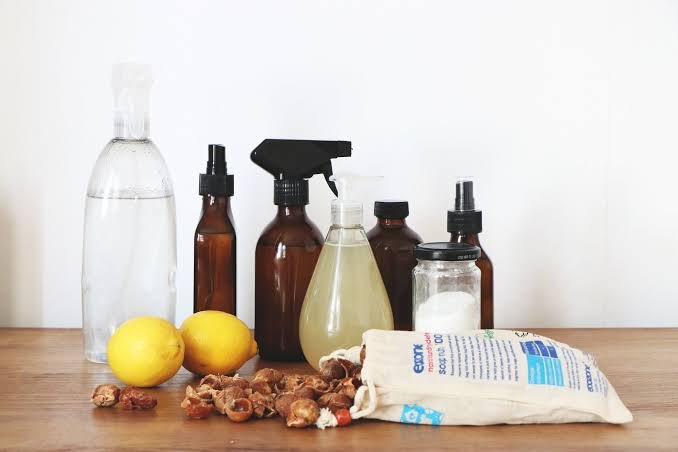
Direct answer: A diluted white vinegar solution (roughly 1 part vinegar to 3 parts water) works effectively as a natural cleaner for glass, countertops, and general surfaces, cutting grease and mild grime without leaving the chemical residue found in many commercial cleaners.
This is genuinely the workhorse of natural cleaning, and for good reason — it’s cheap, widely available, and does a solid job on everyday grime. Add a few drops of lemon essential oil if the vinegar smell bothers you; it fades within minutes anyway once the surface dries.
Where it doesn’t work well: heavily greased kitchen surfaces or serious grout stains. Don’t expect it to replace a proper degreaser for those jobs — I learned this after stubbornly trying to vinegar my way through a stovetop backsplash that really needed something stronger.
2. Baking Soda for Scrubbing Without Scratching
Baking soda handles the abrasive cleaning jobs that vinegar can’t — bathroom tiles, sink stains, stovetop grime — without scratching surfaces the way some commercial scouring powders can.
- Mix into a paste with a little water for scrubbing sinks and bathroom tiles
- Sprinkle dry on carpets before vacuuming to lift odours, particularly useful in homes with pets
- Use on stainless steel utensils and cookware for stubborn burnt-on residue
Picture a household with a young puppy still getting house-trained — baking soda sprinkled on the affected carpet area, left for 20-30 minutes, then vacuumed, handles lingering odour far better than a heavily perfumed commercial spray that just masks the smell temporarily.
3. Lemon for Cutting Grease and Natural Freshness
Lemon’s natural acidity works similarly to vinegar for cutting grease, but with a genuinely pleasant smell that doesn’t need masking with additional fragrance. Halved lemons rubbed directly on cutting boards handle mild stains and odours well.
For kitchen surfaces where kids or pets might make contact soon after cleaning, lemon-based solutions feel like a safer bet than anything with an artificial fragrance list you can’t fully parse.
A quick combination worth trying: equal parts lemon juice and water in a spray bottle for daily kitchen counter wipe-downs. It won’t handle heavy grease, but for routine daily cleaning it does the job.
4. Castile Soap for Floors Where Pets and Kids Spend the Most Time
Castile soap, made from plant oils, is one of the gentler options for regular floor cleaning in rooms where pets nap or kids play on the ground. Diluted properly (check the bottle, usually a few tablespoons per bucket of water), it cleans without the harsh residue some floor cleaners leave behind.
- Look for unscented versions if your pet or child is sensitive to fragrance
- Rinse floors with plain water after castile soap cleaning for genuinely spotless results, since it can leave a slight film if used too concentrated
- Works on most flooring types, though check compatibility with natural stone or specific wood finishes first
5. Steam Cleaning: Chemical-Free for Deeper Cleans
Direct answer: Steam cleaners use high-temperature water vapor to sanitize surfaces without any chemical residue, making them one of the most effective natural cleaning methods for homes with pets and kids — particularly for upholstery, tile grout, and pet bedding.
A basic handheld steam cleaner (₹2,500-6,000 in India) handles jobs that natural liquid solutions genuinely struggle with — grout lines, pet bedding, upholstery that’s absorbed odours over time. The heat kills most bacteria and dust mites without needing any chemical additive at all.
I was skeptical about the price initially, but honestly, it’s paid for itself just in how much less often I’m buying specialized cleaning sprays now.
6. Essential Oils: Useful, But With Real Caveats for Pets
Essential oils get recommended constantly in natural cleaning content, but this is exactly the area where caution matters most if you’ve got pets, especially cats. Some essential oils — tea tree, eucalyptus, and certain citrus oils in concentrated form — are genuinely toxic to cats even in small amounts.
- Lavender and lemon, heavily diluted, are generally considered safer around dogs, but check with your vet before regular use around cats specifically
- Never apply essential oils directly to pet bedding or areas where a cat regularly grooms itself
- If you’re unsure, skip essential oils in cleaning solutions entirely and stick to the unscented base ingredients above
This is the one area of natural cleaning where “natural” doesn’t automatically mean “safe” — worth remembering before adding oils to every DIY spray recipe you find online.
What Natural Cleaning Genuinely Can’t Replace
I don’t want to oversell this approach. Certain situations still need proper disinfectants, particularly if there’s been actual illness in the house or a pet-related mess involving bodily fluids.
- Disinfecting after a stomach bug or contagious illness in the household
- Deep sanitizing pet waste accidents, where proper enzymatic cleaners actually break down the mess better than vinegar alone
- Mould removal, which usually needs a targeted treatment beyond general natural cleaning solutions
[link to related guide on low budget bathroom renovation here] if mould has become a recurring structural issue rather than a surface cleaning one.
Natural Home Cleaning Tips: Quick Reference Table
| Ingredient | Best For | Avoid Using On |
| Vinegar solution | Glass, counters, general surfaces | Natural stone, heavily greased areas |
| Baking soda | Scrubbing, odour absorption | Delicate polished surfaces |
| Lemon | Cutting boards, light grease | Unsealed wood |
| Castile soap | Floors, general surfaces | Areas needing residue-free rinse skipped |
| Steam cleaner | Upholstery, grout, pet bedding | Unsealed wood floors |
| Essential oils | Fragrance (with caution) | Anywhere cats regularly groom |
FAQ: Common Questions About Natural Home Cleaning Tips
Are natural cleaning products actually as effective as commercial ones? For everyday grime, yes, largely. For heavy grease, serious stains, or disinfection needs, natural options often fall short and a proper commercial product does the job faster.
Is vinegar safe to use around dogs and cats? Generally yes, once diluted and dried, since the smell fades quickly and it’s not toxic in the amounts used for cleaning. Some pets dislike the smell while it’s still wet, so keep them out of the room briefly during application.
Can I make my own natural cleaning spray at home? Yes, a vinegar-water base with a few drops of pet-safe essential oil (or none at all) covers most general surface cleaning needs, and costs a fraction of store-bought natural cleaning brands.
What natural cleaning method works best for pet odours specifically? Baking soda for carpets and upholstery, combined with a steam clean if you have access to one. For serious pet accidents, an enzymatic cleaner (not strictly “natural” but still non-toxic) tends to work better than either.
Are essential oils safe to diffuse or use around cats? Not always — several common essential oils are genuinely toxic to cats even through skin contact or inhalation. Check with your vet before using any essential oil regularly in a home with cats.
How often should I deep clean using natural methods versus regular cleaning? Daily wipe-downs with a mild vinegar or castile soap solution work fine for routine cleaning. Reserve steam cleaning or more intensive natural deep-cleans for a weekly or bi-weekly schedule, depending on how much pet and kid activity your home sees.
Final Thoughts
Switching to natural cleaning methods genuinely makes sense once there’s a curious toddler or a pet spending most of their day at floor level. Vinegar, baking soda, lemon, and castile soap cover the vast majority of everyday cleaning needs without the chemical residue worry.
Just remember the honest limits — natural doesn’t mean risk-free with essential oils around cats, and some messes genuinely need something stronger than a DIY spray. Start by swapping your everyday floor and counter cleaner first; that’s the highest-contact surface in the house and the easiest place to see the difference right away.