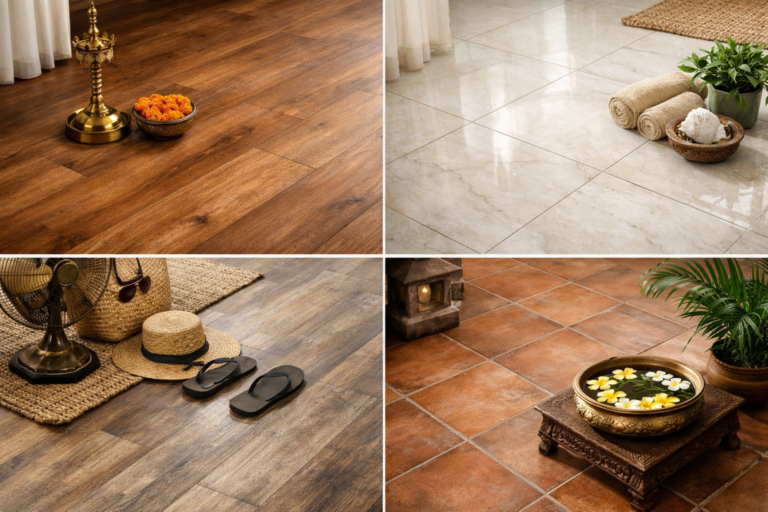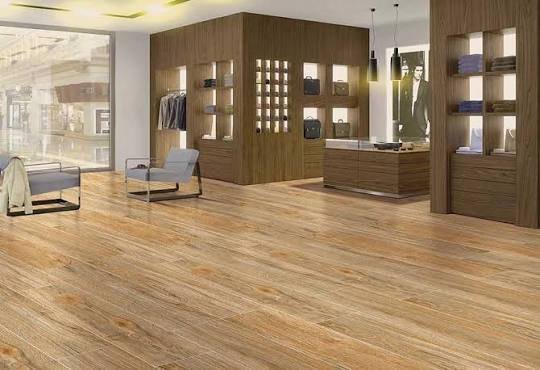
So you’re renovating, or maybe building from scratch, and you’ve hit that one decision that seems to trip up almost everyone — vitrified tiles vs wooden flooring. I get asked about this constantly, usually by someone standing in a tile showroom in Jaipur or Pune looking mildly overwhelmed. And honestly? There’s no single right answer. It depends on your budget, your climate, how much upkeep you’re willing to do, and even which room we’re talking about. Let’s break it down properly, room by room and rupee by rupee, so you can actually make a decision instead of just Googling for another hour.
What Are Vitrified Tiles, Exactly?
Vitrified tiles are basically clay mixed with silica and quartz, fired at extremely high temperatures until the material becomes glass-like and non-porous. That’s where the name comes from — “vitrified” means turned into glass.
Vitrified tiles are popular in Indian homes because they’re tough, water-resistant, and don’t need the kind of babying that natural materials do. You’ll find them in almost every new apartment complex across Jaipur, Ahmedabad, and Bengaluru these days.
There are a few types worth knowing about:
- Double charge vitrified tiles — the pattern goes two layers deep, so scratches don’t reveal a different colour underneath
- Full body vitrified tiles — the design runs through the entire thickness of the tile, making them the most durable option
- Soluble salt tiles — cheaper, decent for walls, but not something I’d recommend for heavy-traffic flooring
- Glazed vitrified tiles (GVT) — glossy finish, great for that showroom look, though they can get slippery when wet
Quick answer: Vitrified tiles are ceramic tiles fired at high heat until they become non-porous and glass-like. They resist water, stains, and scratches far better than regular ceramic tiles, which is why they’ve become the default flooring choice in most Indian homes built after 2015 or so.
What Counts as Wooden Flooring Today?
Here’s something people often get wrong — “wooden flooring” doesn’t just mean solid teak planks anymore. There are actually three broad categories, and the price gap between them is huge.
Solid wood flooring is the real deal — actual timber, usually teak, oak, or sal. Gorgeous, but expensive and fussy about humidity.
Engineered wood flooring is a thin layer of real wood bonded over plywood layers. More stable in India’s varying humidity, and noticeably cheaper than solid wood.
Laminate flooring isn’t wood at all, technically. It’s a high-resolution wood-print layer over a fibreboard core. Looks convincing from a few feet away, costs a fraction of the real thing.
I’ve noticed a lot of homeowners assume “wooden flooring” automatically means solid wood, then get sticker shock when they price it out. Ask specifically which category a vendor is quoting you — it changes everything.
Vitrified Tiles vs Wooden Flooring: Cost Comparison
Let’s talk numbers, because this is usually where the decision actually gets made.
Vitrified tiles typically run ₹40 to ₹150 per square foot for the material, plus another ₹15-25 for installation. Premium large-format or imported vitrified tiles can climb past ₹250 per square foot, but for most homes, mid-range tiles do the job fine.
Wooden flooring is a different story altogether:
- Laminate flooring: roughly ₹80-150 per sq ft
- Engineered wood: roughly ₹150-400 per sq ft
- Solid wood (teak, sal): ₹400-800+ per sq ft, sometimes touching ₹1,200 for premium grades
So for a standard 1,000 sq ft flat, you’re looking at maybe ₹65,000-1,00,000 for a decent vitrified tile job, versus ₹4-8 lakh for genuine solid wood across the whole house. That’s not a small difference — it’s the kind of gap that changes the entire budget conversation.
Picture a small business owner in Jaipur fitting out a new 2BHK. Tiles for the whole flat, plus labour, came to under a lakh. He’d originally wanted wooden flooring in the bedrooms too, but after pricing it out, he went with vitrified tiles everywhere except one accent room. That’s a pretty common compromise, honestly.
Durability: Which One Actually Lasts Longer?
Quick answer: Vitrified tiles generally outlast wooden flooring in Indian conditions — they resist moisture, termites, and daily wear without much maintenance, easily lasting 15-20 years or more. Wood, especially solid wood, can last just as long but only with consistent care and the right humidity control.
This is where a lot of the debate over vitrified tiles vs wooden flooring really lives. Tiles don’t warp. They don’t get eaten by termites. Spill a glass of water on them and nothing happens — you just wipe it up.
Wood is more temperamental. Indian summers and monsoons put real stress on timber. It expands, contracts, sometimes cups or cracks if the humidity swings are severe. Engineered wood handles this better than solid wood, but it’s still not bulletproof.
That said — and this is my honest opinion — well-maintained solid wood flooring ages beautifully in a way tiles never will. Tiles look the same on day one and day 3,000. Wood develops character, a patina, little marks that tell a story. Some people love that. Others find it annoying. There’s no wrong answer here, just a preference.
Maintenance: Day-to-Day Living With Each
Nobody talks about maintenance enough before buying, and then they’re surprised later. Let’s fix that.
Vitrified tiles need almost nothing — a mop, some mild detergent, done. No sealing, no polishing, no special products. You could genuinely forget about maintenance for years and the floor would still look decent.
Wooden flooring asks for more attention:
- Avoid wet mopping; use a barely damp cloth instead
- Keep humidity between roughly 40-60% if possible
- Re-polish or re-coat every few years depending on foot traffic
- Use felt pads under furniture legs (scratches are a real headache otherwise)
- Watch out for direct sunlight fading the finish over time in south-facing rooms
Has your wooden furniture ever developed water rings from a sweaty glass left overnight? Now imagine that risk across your entire living room floor. That’s the trade-off with wood — it rewards care and punishes neglect.
Comfort, Warmth, and the “Feel Factor”
This one’s underrated, but it matters more than people expect once they’re actually living with the floor.
Wood feels warm underfoot, even in winter, and has a slight give to it that’s easier on joints — something people with older parents at home tend to notice quickly. Tiles, on the other hand, stay cold most of the year and feel hard, which is lovely in Rajasthan’s brutal summers but less fun in December mornings.
Sound is another factor nobody mentions. Wooden floors dampen footstep noise; tiled floors can feel a bit echoey, especially in larger, sparsely furnished rooms. If you’ve got young kids running around, you’ll notice this fast.
Aesthetics and Resale Value
Both can look stunning, so this really comes down to the vibe you’re after and, frankly, what buyers in your area expect.
Quick answer: In most Indian metros, vitrified tiles are the safer bet for resale value since buyers expect them and see wooden flooring as a bonus, not a necessity. Wood tends to add more perceived luxury in premium villa or bungalow segments specifically.
I’ve walked through enough properties to notice a pattern — in mid-range apartments, buyers barely register the tile brand as long as it looks clean and modern. In high-end independent houses, though, a wooden staircase or engineered wood in the living room genuinely shifts how “premium” the place feels to a buyer walking in.
Large-format vitrified tiles (like 800x1600mm) have gotten popular recently because they mimic marble or wood grain convincingly while keeping the practical benefits. Worth checking out if you want the wood look without wood’s headaches. [link to related guide on choosing tile sizes for small rooms here]
Which Rooms Suit Which Flooring?
You don’t have to pick just one for the whole house — most people don’t, in fact.
- Kitchen and bathrooms: Vitrified tiles, no contest. Water resistance wins here every time.
- Living room: Either works; wood adds warmth, tiles add easy upkeep.
- Bedrooms: Many homeowners prefer wood or laminate here for the underfoot comfort.
- Balconies and utility areas: Tiles, always — outdoor exposure destroys wood fast.
- Home office or study: Wood tends to feel calmer and quieter for focused work.
A mixed approach is honestly what most interior designers recommend anyway. [link to related guide on flooring ideas by room here]
Environmental Impact: A Quick Word
Solid wood, if sourced from certified sustainable plantations, is renewable — but a lot of cheap timber in India isn’t sourced responsibly, so ask questions before buying. Vitrified tiles use significant energy in manufacturing but last for decades without replacement, which offsets some of that footprint over time. Neither is perfectly clean; it’s more about which trade-off bothers you less.
FAQs: What People Actually Ask About This
Is vitrified tile flooring cheaper than wooden flooring in India? Yes, almost always. Even premium vitrified tiles rarely cross what mid-range engineered wood costs, and solid wood is in a completely different price bracket altogether.
Does wooden flooring increase home value in India? Sometimes, particularly in premium segments or independent houses. In standard apartments, buyers rarely pay extra for it — vitrified tiles are simply the expected norm.
Which is better for humid or coastal cities like Mumbai or Kochi? Vitrified tiles handle humidity far better. Wood, especially solid wood, is more prone to warping and moisture damage in consistently humid climates.
Can I install wooden flooring over existing vitrified tiles? Yes, engineered wood or laminate can often go directly over tiles if the surface is level, which actually saves on demolition costs.
How long do vitrified tiles typically last? With basic care, 15-20 years easily, sometimes longer. They don’t degrade the way wood can if there’s water exposure.
Is vitrified tile flooring slippery? Glazed vitrified tiles can be slippery when wet, so for bathrooms or balconies, it’s worth asking for matte or anti-skid variants specifically.
Final Thoughts
There’s no universal winner in the vitrified tiles vs wooden flooring debate — it genuinely depends on your budget, your climate, and how much maintenance you’re willing to sign up for. If you want low upkeep and water resistance, tiles win easily. If warmth, comfort, and that timeless look matter more to you, wood earns its higher price tag.
My honest suggestion? Don’t force one material across the entire house. Use tiles where practicality matters most — kitchens, bathrooms, balconies — and reserve wood or engineered wood for bedrooms or the living room if your budget allows it. Walk into a couple of showrooms, ask for actual samples, and live with them under your home’s lighting for a day or two before deciding. That fifteen-minute showroom visit tells you a lot less than seeing the sample on your own floor at 7pm with the lights on.